
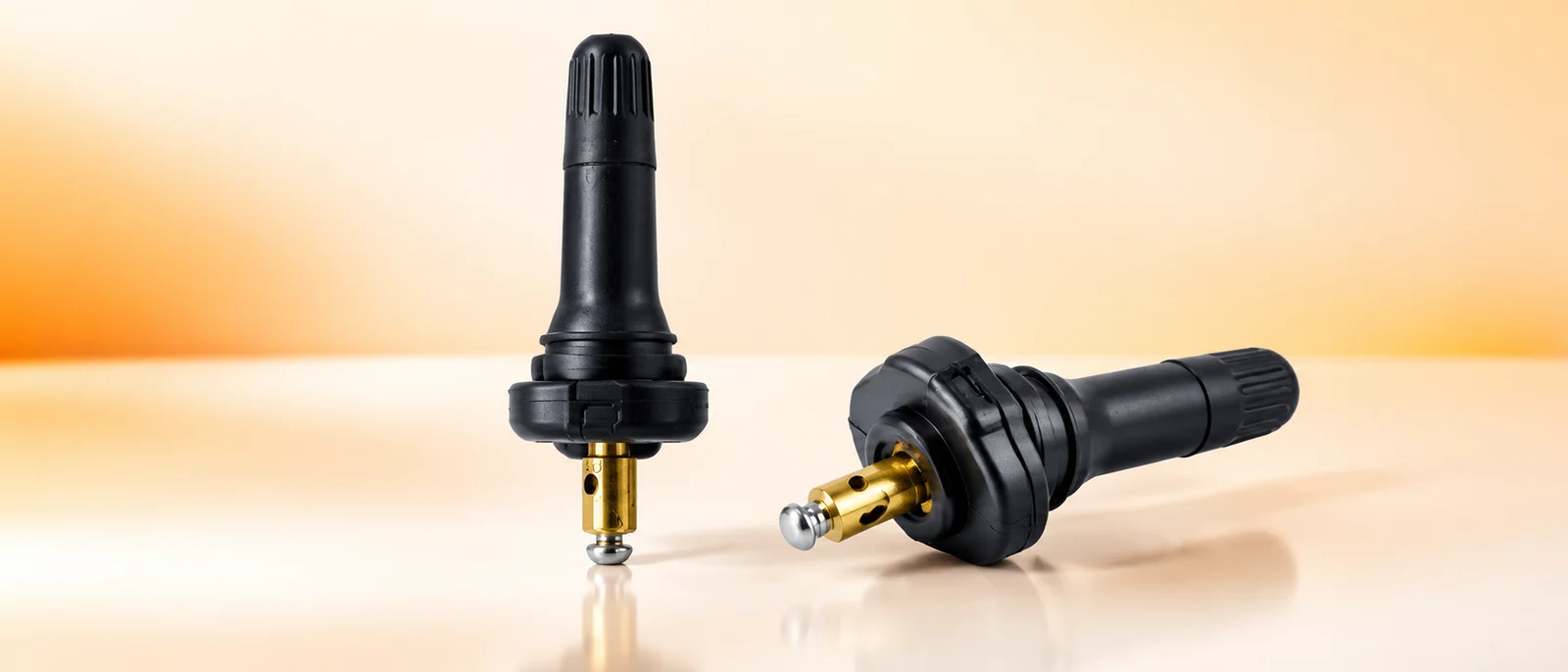
TPMS (Tyre Pressure Monitoring System) sensors monitor tyre pressure in real time and warn the driver before an under-inflated tyre becomes dangerous. On most vehicles the sensors are mounted on the valve stem - a tyre valve with a sensor fitted is simply called a TPMS valve - which means every tyre service is also an opportunity to damage - or protect - an expensive component. These practices help fleets, workshops and distributors get the longest possible life from every TPMS valve.
The two parts that actually fail
A TPMS valve assembly has two distinct pieces of hardware with very different service lives:
- The sensor - the electronics, sealed with a non-replaceable battery. It lasts roughly 5-10 years and cannot be recharged or repaired.
- The service kit - the valve stem, core, cap, seal, grommet and (on clamp-in types) the nut and washer. These are cheap, wear out far sooner, and should be replaced every time a tyre is fitted.
The most common cause of a slow leak or a false pressure warning is not the sensor electronics but a tired seal or valve core in the service kit.
Understand battery life
When a low-battery alert appears, the sensor must be replaced - the unit is sealed for its lifetime and cannot be opened or recharged. Because every sensor in a set is activated at roughly the same time, they tend to reach end of life together, so plan to replace the full set at once rather than making repeated return trips.
Take care during tyre service
- Use TPMS-compatible tyre changers and deflate the tyre fully before breaking the bead, so the sensor body is not crushed between the tyre and the rim.
- Never let the valve hang unsupported when the tyre is off - a dropped sensor can crack the housing or damage the antenna.
- Replace the service kit (stem, core, seal and grommet) on every tyre change; reuse is the single biggest cause of leaks.
- Torque the sensor nut to specification. Over-tightening crushes the rubber seal and can crack the sensor; under-tightening causes a slow leak.
- Keep the cap on. Dirt and moisture entering the core are a leading cause of seized or leaking TPMS valves.
Materials: rubber vs aluminium stems
TPMS valve stems are made in two broad types, and the choice affects durability and corrosion behaviour:
| Stem type | Construction | Best for | Notes |
|---|---|---|---|
| Rubber snap-in | EPDM rubber & brass stem, brass core | Standard passenger and light-truck fitments | Economical; ideal where OE uses a rubber stem |
| Aluminium & rubber | Aluminium stem with rubber seal, brass core | Premium and aftermarket installations | Durable; match the seal material to the rim to avoid galvanic corrosion |
Our TPMS valve stems are supplied in both constructions - see the TPMS valve stem range, which covers 47 vehicle applications from Buick, Toyota, Nissan and BMW to aftermarket sensors such as Autel.
Diagnosing common TPMS problems
| Symptom | Most likely cause | Fix |
|---|---|---|
| Slow pressure loss | Leaking valve core or hardened seal | Replace the service kit |
| Warning light stays on after inflating | Sensor not relearned, or weak battery | Relearn the sensor; test and replace if the battery is low |
| Intermittent or no signal | Damaged antenna, corroded stem or RF interference | Inspect the stem and housing; replace if damaged |
| Pressure reads incorrectly | Blocked or wet valve core | Clean or replace the core and refit the cap |
Choose quality replacement parts
TPMS valve stems and service kits are precision parts. A poorly machined stem can leak at the seal, and a mismatched core can give inaccurate readings. When sourcing replacements, look for:
- Correct valve hole diameter for the rim (for example 11.5 mm for most passenger fitments).
- Corrosion-resistant materials - brass cores and plated or EPDM-coated stems.
- An 80 PSI pressure rating for standard passenger applications, with higher-rated designs for commercial use.
- Vehicle compatibility - match the stem to the make and model, or choose a universal sensor stem such as those for Autel systems.
Pairing quality TPMS stems with good tyre valve practice keeps warning lights off and avoids call-backs. For punctures, see patch vs plug. Sourcing stems? See the TPMS valve stem buying guide.
- FMVSS 138 (US tyre pressure monitoring rule) and UNECE R141 (TPMS type approval) - regulatory background for TPMS fitment
- Product specifications and pressure ratings: Century Auto Parts published product data