
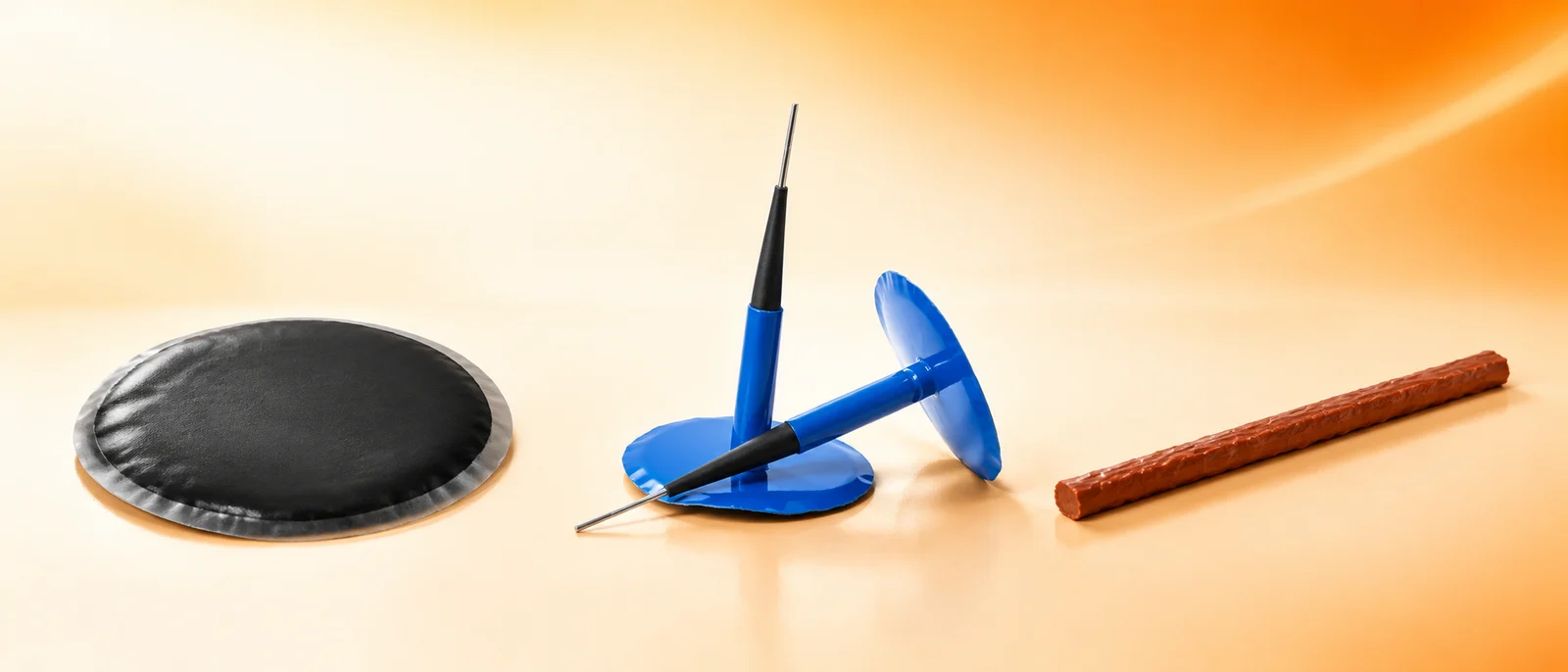
Not every puncture needs the same repair, and choosing the wrong method can turn a safe tyre into a dangerous one. A plug might get a driver home, but only an internal patch restores a tyre to a permanent, roadworthy condition. This guide explains the three main options - the plug (seal string), the tyre patch, and the mushroom patch plug - and how to store and select them.
The three repair methods compared
| Method | Where it seals | Repair type | Best for |
|---|---|---|---|
| Plug / seal string | Inside the puncture channel, from outside | Temporary | Roadside emergency to reach a workshop |
| Tyre patch | Inner liner, over the puncture | Permanent | Repairable punctures in the tread area |
| Mushroom patch plug | Both - stem fills the hole, patch seals the liner | Permanent | The most reliable permanent repair |
Tyre plug (seal string)
A tyre plug is a rubber strip - often called a seal string - inserted from outside the tyre to fill the puncture. It creates an immediate seal and is ideal for quick, temporary, roadside repairs. It does not bond to the inner liner, so it should always be treated as a get-you-home fix and followed by a proper internal repair. See our step-by-step seal string repair guide.
Tyre patch
A tyre patch is applied to the inner liner of the tyre, providing a permanent repair that vulcanises to the rubber. Patches come in several forms, and the right one depends on the tyre construction and the location of the damage:
- Radial patches - reinforced, for radial tyres where the cords run across the crown.
- Bias-ply patches - for older bias-ply tyre constructions.
- All-purpose / round patches - general-purpose patching in a range of sizes.
- Sidewall patches - heavier, for sidewall area repairs.
We supply both US-style and EU-style tyre patches, including radial, bias-ply, black radial, and all-purpose round patches.
Mushroom patch plug
The mushroom patch plug combines both methods in one piece: a stem fills the puncture from inside while a patch bonds to the inner liner, so it seals the hole and reinforces the area around it. It is widely considered the most reliable permanent repair for passenger car and light truck tyres. See our mushroom patch plug range.
When a tyre cannot be repaired
No method should be used on the following, and the tyre must be replaced:
- Damage in the sidewall (except specifically rated sidewall repairs) or the shoulder.
- Punctures larger than the maximum size the patch or plug is rated for.
- Any puncture where the cords are cut, exposed or separated.
- Run-flat tyres that have been driven while flat, or tyres with internal damage from overheating.
- Multiple repairs too close together or overlapping.
How to store tyre repair products
Patches and sealants rely on a self-vulcanising rubber compound that loses effectiveness if stored incorrectly. Keep them in a cool, dry place away from direct sunlight and heat sources. The ideal storage temperature is 15-25°C (59-77°F). Stock should be rotated so older patches are used first, and any patch with a hardened or discoloured surface should be discarded.
Choosing the right repair product
- Identify the tyre construction - radial or bias-ply - and pick the matching patch.
- Measure the injury and select a patch large enough to overlap the injury with a margin.
- Match the method to the situation - temporary plug for roadside, permanent patch or mushroom plug for the workshop.
- Check compliance with your market's repair standards before offering a permanent repair.
- Store correctly so the rubber stays fresh until it is used.
To build a complete repair range, combine plugs, patches and mushroom plugs with our tyre seal strings. See the full tyre patch range or contact our team for a quote.
- BS AU 159 (UK standard for repair of car and light van tyres) - repair method and damage-limit reference
- Product specifications and patch ranges: Century Auto Parts published product data